For five years, Mrs. Gedia Saney Mohamed and her family lived without a toilet in Soley IDP settlement, Ethiopia, facing the health risks and indignity of open defecation. Through a Stichting Vluchteling-supported project, RACIDA is helping transform sanitation and restore dignity through safe, flood-protected latrines.
For five years, 52-year-old Mrs. Gedia Saney Mohamed and her household of eight in Soley IDP settlement, Dollo-Ado Woreda, Liban Zone, Somali Region of Ethiopia, lived without a toilet. Like many other families displaced by drought and conflict, they were forced to defecate in the open. Waste scattered across the settlement. During the rains it washed into water sources, fuelling outbreaks of diarrhoea, abdominal infections and cholera. Women and children bore the heaviest burden—risking their health, safety and dignity every time they stepped outside after dark.
“My household individuals were forced to defecate in the open area, especially the children and women,” Mrs. Gedia explained. “This human waste scattered everywhere and during the rainy season it drained to some water sources, leading to the outbreak of some illness such as abdominal infection, diarrhoea and cholera.”
A Practical, Community-Centred Response
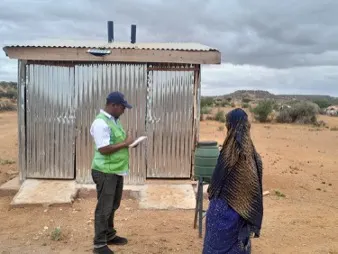
Under the Stichting Vluchteling (SV)-supported project, RACIDA constructed 19 twin flood-protected latrines across Dollo-Ado, Filtu and Dheka Woredas, serving both Internally Displaced Persons and host communities. Each twin unit provides separate rooms for men and women, was sited with direct community input, and is equipped with solar lights and handwashing containers.
The flood-protected design keeps the facilities usable even during heavy rains that previously turned open defecation sites into contamination hotspots. Solar lighting improves security for nighttime use—especially important for women and girls—while the handwashing stations support basic hygiene that interrupts the transmission of disease.
For Mrs. Gedia and her neighbours, the change has been immediate. Proper waste containment has reduced environmental contamination and the associated health risks. Families no longer have to choose between dignity and basic needs. Women in particular have regained privacy that had been denied to them for years.
“The provision of well-constructed latrines not only ensures proper waste disposal but also upholds the privacy and dignity of users, especially women facing challenging circumstances,” she noted.
Communities Taking Ownership
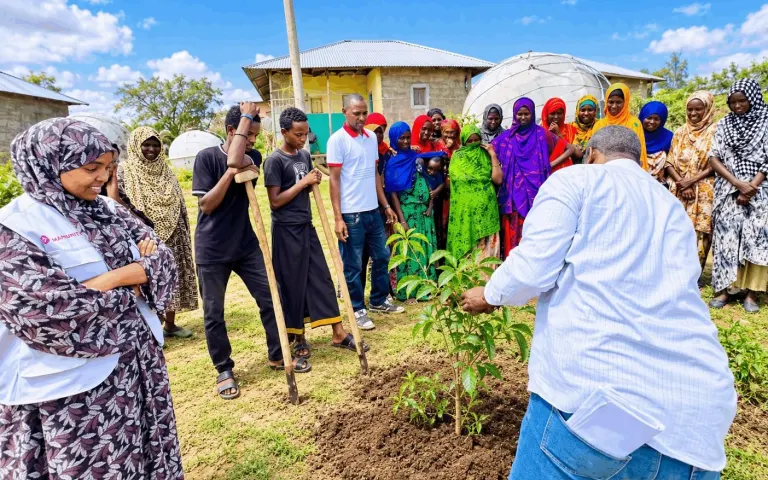
The impact did not stop at the 19 units RACIDA built. Inspired by the facilities and the process of community involvement in site selection, residents in Soley and neighbouring settlements began constructing additional latrines themselves. Mrs. Gedia described this as a milestone: the initiative demonstrated that communities can reduce dependency and take responsibility for their own sanitation future.
This self-driven replication is exactly the kind of outcome RACIDA seeks. By combining durable infrastructure with genuine participation, the project has strengthened both immediate health outcomes and longer-term community capacity.
Building Resilience Together
RACIDA’s work in the Somali Region forms part of its wider commitment to supporting pastoral and agro-pastoral communities across the Horn of Africa who face recurrent drought, conflict and displacement. In partnership with Stichting Vluchteling, the organisation is delivering practical WASH solutions that protect health, restore dignity and empower people to shape their own recovery.
Mrs. Gedia’s story—from years of open defecation and preventable illness to safer, more dignified living—illustrates what is possible when infrastructure is designed with communities, not for them. The flood-protected twin latrines are more than toilets; they are a foundation for healthier households and more resilient settlements